The country's National Vision 2030 prioritizes economic diversification beyond oil and gas, and universities play a central role in developing the skilled workforce this transformation requires. Today's students in Qatar can choose between locally-founded institutions focused on regional workforce needs and branch campuses of prestigious international universities offering globally-recognized degrees. Whether you're a Qatari national seeking career-focused training, an international student attracted by scholarship opportunities, or a regional applicant wanting quality education close to home, understanding each university's unique strengths helps you make informed enrollment decisions. This ranking highlights six of Qatar's best universities based on academic quality, applied learning opportunities, career outcomes, and alignment with the country's development goals.
What Makes Qatar's Universities Stand Out
Qatar's approach to higher education differs from many countries by deliberately blending international partnerships with locally-driven institutions. Education City, developed by Qatar Foundation, hosts branch campuses of top American universities that maintain the same curriculum standards and accreditation as their home campuses while adapting to regional context. Meanwhile, nationally-founded universities like UDST focus specifically on applied skills that Qatar's employers need immediately, creating direct pathways from classroom to career. This dual model gives students genuine choice between globally-portable credentials and workforce-aligned training designed for the Qatari and Gulf job markets. English dominates as the language of instruction at most institutions, though some programs offer Arabic-language study, and the relatively small student populations create closer faculty relationships than massive public universities elsewhere provide.
Top 6 Universities in Qatar
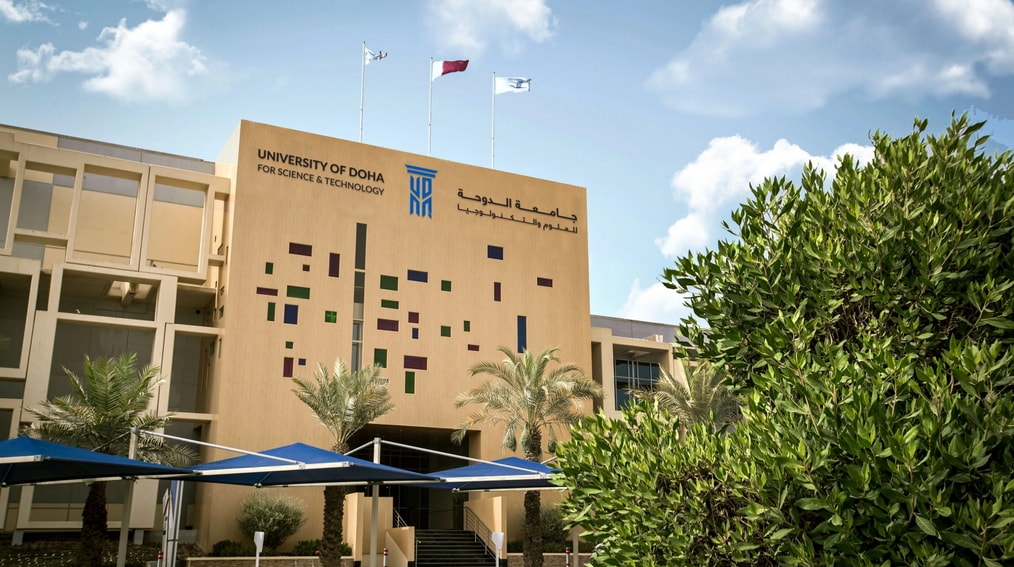
1. University of Doha for Science and Technology (UDST) – Best for Applied, Career-Focused Education
The University of Doha for Science and Technology stands as Qatar's first national applied university, deliberately structured to bridge the gap between academic theory and workplace demands through hands-on bachelor's and master's degree programs. UDST's curriculum spans health sciences, business administration, computing and information systems, and multiple engineering disciplines, with every program designed around real-world skill development rather than purely theoretical knowledge. The university maintains extensive industry partnerships that shape curriculum design, provide internship placements, and ensure graduates possess the specific competencies Qatari employers actively seek. Campus facilities reflect this applied focus with state-of-the-art laboratories, simulation centers that replicate professional environments, and technology resources that mirror what students will use in their careers. Programs are delivered entirely in English, making them accessible to Qatar's diverse population while preparing graduates for international mobility. What distinguishes UDST from traditional research universities is its explicit mission to produce workforce-ready graduates who can immediately contribute to Qatar's economic development goals across healthcare, technology, business, and infrastructure sectors that drive the National Vision 2030 agenda.
2. Carnegie Mellon University in Qatar – Best for Computing and Information Systems
Carnegie Mellon University's Qatar campus operates as a Qatar Foundation partner, delivering the same globally-ranked programs in computer science, business administration, information systems, and biological sciences that have made CMU's Pittsburgh campus renowned worldwide. Students earn degrees that are identical to those awarded in the United States, maintaining CMU's rigorous academic standards while studying in Doha's Education City. The computer science program particularly stands out, consistently ranking among the world's best and producing graduates who secure positions at major technology companies and pursue advanced degrees at elite institutions globally. Research opportunities abound despite the smaller campus size, with faculty conducting cutting-edge work in artificial intelligence, cybersecurity, human-computer interaction, and computational biology. The student body remains intentionally diverse, bringing together Qatari nationals with international students from dozens of countries, creating cross-cultural learning experiences that mirror the global technology industry graduates will enter. For students seeking American-style education with elite university credentials while remaining in the Gulf region, CMU-Qatar provides an exceptional option that combines academic prestige with regional accessibility.
3. Georgetown University in Qatar – Best for International Affairs and Policy Studies
Georgetown University's School of Foreign Service established its Qatar campus to extend the institution's legendary international relations expertise to the Middle East, offering specialized programs in international politics, international economics, culture and politics, and international history. The curriculum maintains Georgetown's Washington, D.C. standards while incorporating regional perspectives that enhance understanding of Middle Eastern politics, Islamic history, and Gulf region dynamics that global leaders increasingly need to navigate. Students engage directly with policy questions affecting Qatar and neighboring countries, benefit from guest lectures by diplomats and international organization leaders working in the region, and complete internships at embassies, NGOs, and governmental organizations operating throughout the Gulf. Graduates pursue careers in diplomacy, international development, journalism, global business, and policy analysis, with the Georgetown credential opening doors at foreign ministries, United Nations agencies, multinational corporations, and think tanks worldwide. The campus brings together students from the Middle East, North Africa, Asia, and beyond, creating classroom discussions enriched by genuinely diverse perspectives on global issues that can't be replicated in less international settings.
4. Virginia Commonwealth University School of the Arts in Qatar – Best for Design and Creative Careers
VCUarts Qatar operates as the Gulf region's premier institution for art and design education, offering accredited American bachelor's degrees in graphic design, interior design, fashion design, and fashion merchandising alongside art history programs. The curriculum follows VCU's Richmond campus standards, which rank among America's top public art schools, while incorporating regional design traditions, market needs, and cultural contexts that make graduates particularly valuable to Gulf-based creative industries. Students work in professional-grade studios and workshops, build portfolios that meet international industry standards, and complete internships with design firms, fashion houses, museums, and cultural organizations throughout Qatar and the broader region. Faculty bring both American academic credentials and experience working in Middle Eastern creative markets, helping students navigate the unique opportunities and considerations of building design careers in this context. For aspiring designers, fashion professionals, and visual artists who want to establish creative careers in the Gulf while earning internationally-recognized American credentials, VCUarts Qatar provides specialized training that purely academic universities cannot match.
5. Lusail University – Best for Private-Sector Multidisciplinary Study
Lusail University launched in 2020 as Qatar's first national private university, offering undergraduate and graduate programs across law, business administration, education, and media studies with plans to expand into additional fields. As a young institution, Lusail emphasizes innovation in teaching methods, responsiveness to student needs, and agility in adapting programs to emerging job market requirements that older universities often struggle to match. The university serves both Qatari nationals and international students, creating diverse learning communities while maintaining strong connections to local employers who participate in curriculum development and recruitment. Programs combine theoretical foundations with practical applications, preparing graduates for professional roles in Qatar's private sector, government ministries, and non-profit organizations. While Lusail lacks the decades-long reputation of Education City's American university branches, its local establishment and focus on programs specifically relevant to Qatari workforce needs make it increasingly attractive for students who plan to build careers primarily within Qatar rather than seeking international mobility.
6. Doha Institute for Graduate Studies – Best for Social Science and Public Policy Research
The Doha Institute for Graduate Studies operates exclusively at the master's and doctoral levels, specializing in social sciences, public administration, development economics, conflict resolution, psychology, and media studies with a distinctly regional perspective. Unlike undergraduate-focused universities, DIGS attracts mid-career professionals and recent graduates across the Gulf region who want advanced training in fields directly relevant to governance, policy development, and social analysis in Arab contexts. Many programs are delivered in Arabic, making them particularly accessible to students who prefer studying complex material in their native language and plan to work in Arabic-speaking professional environments. The institute emphasizes research-led learning, with students conducting original investigations into regional political, economic, and social questions rather than simply absorbing existing Western-produced scholarship. Faculty combine academic credentials with practical experience in governmental organizations, international development agencies, and policy think tanks, bringing current real-world expertise into seminar discussions. For graduate students focused on careers in public policy, development work, governmental administration, or academic research on Middle Eastern topics, DIGS provides specialized advanced training difficult to find elsewhere in the region.
Choosing the Right Qatar University for Your Goals
Selecting among Qatar's universities requires clarity about your educational priorities and career objectives. Students seeking internationally portable credentials from globally-recognized institutions should focus on Education City's American university branches like Carnegie Mellon, Georgetown, and VCUarts, where degrees carry the same weight as those earned on home campuses. Those planning to build careers primarily in Qatar or the Gulf region may find greater value in workforce-aligned institutions like UDST, where curriculum explicitly matches regional employer needs and industry partnerships facilitate direct hiring pipelines. Consider your field of study carefully technology and computing students benefit from CMU's elite computer science program, international relations aspirants thrive at Georgetown, creative professionals need VCUarts' specialized training, and applied fields from engineering to health sciences align with UDST's mission.
Language of instruction matters significantly for academic success and career preparation. Most Qatar universities teach in English, which provides international mobility but may challenge students whose English proficiency isn't strong. Programs offered in Arabic, like those at Doha Institute, better serve students comfortable in that language and planning Arabic-language professional careers. Campus culture varies considerably too Education City's American branches bring American educational styles including class discussions, group projects, and independent research expectations, while other institutions may follow different pedagogical approaches. Visit campuses when possible, speak with current students, and understand what teaching and learning styles each university emphasizes.
Financial considerations extend beyond tuition to include scholarship availability, living costs in Doha, and return on educational investment. Qatari nationals often receive preferential scholarship access, particularly at nationally-founded institutions, while international students should research Qatar Foundation scholarships and university-specific financial aid carefully. Consider career outcomes data when available employment rates, starting salaries, and graduate school placement statistics indicate how effectively each institution prepares students for post-graduation success. For graduate students, evaluate research facilities, faculty expertise in your specific interests, and whether thesis or coursework paths better match your career plans.
Ready to pursue higher education in Qatar? Identify whether you prioritize global credential portability or regional workforce alignment, research specific programs within your intended field at each university, and reach out to admissions offices to understand application requirements, scholarship opportunities, and how each institution supports student success from enrollment through career placement.