.png)
Attention Deficit Hyperactivity Disorder (ADHD) is a brain disorder that affects a lot of different things, like:
- How you pay attention
- Your ability to sit still
- How you control your behavior.
You might have heard the term ADD (Attention Deficit Disorder), which is the old terminology for referring to the same disorder. “Hyperactivity” was added to the terminology in 1987, which makes sense, because the most common type of ADHD is a combined one – where the person shows symptoms of both inattention and hyperactivity.
While ADHD can’t be prevented or cured, there are ways to manage it. Many people with ADHD live perfectly normal and happy lives. But if you’ve been diagnosed with ADHD and are planning on going to college, then it’s understandable why you might be concerned about how to deal with all the new experiences and difficult work load.
Luckily, schools aren’t new to dealing with ADHD students. It’s estimated that 15 million adults in the United States have ADHD! The Americans with Disabilities Act (ADA) also requires that reasonable accommodations be made for learning disabilities, so especially with severe forms of ADHD, the law requires you to be allowed accommodations. In all, there are ways for you to find help managing ADHD in college.

What Can Colleges Do To Help ADHD Students?
While ADHD is a general diagnosis, it doesn’t show up exactly the same for everyone all the time. What will help you succeed in college is going to depend on who you are and your unique mind! Still, there are some tried and tested ways that can help you navigate university.
When you’re researching colleges to attend, be on the lookout for the following factors that can help you manage college life with ADHD:
- Academic coaching and mentorship
- Workshops on executive function (ie. planning, organizing, and task management)
- Quiet testing environments and additional exam time
- Learning plans
- Counseling
- Assistive technology
- Peer support and study groups
Most colleges are conscientious about neurodivergent students and want to help you succeed, but some colleges go above and beyond to help ADHD students have an excellent education. We’ve mapped out some of those below!
Best ADHD Colleges
American University
Location: Washington, D.C.
Number of Undergraduate Students: 8,500
Acceptance Rate: 39%
What makes American University one of the best colleges for ADHD students is their Learning Services Program (LSP). This is a one year plan that helps freshmen with learning disabilities. Some of the help you get with the LSP include:
- Weekly 1-on-1 meetings with a learning support specialist
- Enrollment in the reserved section of the first year college writing course
- Weekly meetings with a writing tutor for that class
- Personal course advisement
- Consultation with the program advisor about classes the summer before school
- Upper class student mentorship
After the first year, you can still receive help through their Academic Support and Access Center (ASAC), but the LSP is designed to help get you through the challenging first year of your college experience.
Middlebury College

Location: Middlebury, Vermont
Number of Undergraduate Students: 2,500
Acceptance Rate: 15%
An excellent small college where you can receive a great education, Middlebury College is also a place where students with disabilities or disorders that make learning difficult like ADHD don’t have to feel alone. In fact, in the 2022-2023 academic school year, 1 in 5 students got an accommodation from the Disability Resource Center.
So not only is the college used to helping students who need learning accommodations, but there is going to be a good support system among other students who are in similar situations. Small class sizes also help you not feel lost in the system. These are some of the reasons why College Consensus ranked it the #1 school for students with learning disabilities.
Northeastern University

Location: Boston, Massachusetts
Number of Undergraduate Students: 20,000
Acceptance Rate: 7%
One of the top schools in the nation, Northeastern University is also a good place for ADHD students. The Learning Disabilities Program (LDP), which ADHD students are eligible for, allows students to meet twice a week – for an hour each – with a learning specialist. This helps students stay on top of their learning goals. Some of things discussed might be:
- Studying strategies
- Test-taking strategies
- Reading and writing
- Executive functioning
- Progress toward goals
- Use of accommodations
In order to be part of the program, you need to commit to attending all LDP sessions and all your classes!
University of Denver
Location: Denver, Colorado
Number of Undergraduate Students: 6,000
Acceptance Rate: 61%
Like the other colleges already listed, the University of Denver – along with having a beautiful campus – has a specialized program for students who learn differently, called the Learning Effectiveness Program (LEP). While students in the program take all the same classes as anybody else, they receive:
- Personalized counseling
- Tutoring
- Peer mentoring
- Skill building training
- Social skill assistance
The LEP also partners with local grade schools and organizations to bring greater awareness to neurodiversity and universalizing learning.
University of Arizona

Location: Tucson, Arizona
Number of Undergraduate Students: 36,000
Acceptance Rate: 87%
In such a large student body as the University of Arizona, you can be sure that there are other people with ADHD or similar neurodivergence that can come alongside and support you. But there is also a specialized program, the Strategic Alternative Learning Techniques (SALT) center, which is designed to help students who learn differently.
SALT provides services like student support specialists, tutoring, workshops, psychological/wellness services, and innovative educational technology. The University of Arizona also has the ABLE clinic, which provides evaluations to people with suspected neurological disorders (like ADHD) and helps them navigate their education and future career.
Curry College
Location: Milton, Massachusetts
Number of Undergraduate Students: 2,000
Acceptance Rate: 87%
Curry College is home to one of the oldest and most well-respected programs for students who learn differently, called the Program for Advancement of Learning (PAL). What PAL does is create a tight-knit learning community where students learn strategies for success in both 1-on-1 and small group environments, all while staying on course with every other student.
They’ve been a leader in accessible student services for over 50 years, and many students take advantage of this. 1 in 5 incoming Curry students take part in PAL.
Mitchell College
Location: New London, Connecticut
Number of Undergraduate Students: 700
Acceptance Rate: 80%
There are two types of people: those that inch their way into a pool, and those that cannonball straight in. If you find that you’re the first type, and jumping right into college sounds terrifying, then Mitchell College has a program designed for people like you. Thames is a unique, holistic program that helps students ease into post-high school life with helpful faculty and a strong support net. Thames students take personalized courses, experience college life, and gain social confidence.
This is a great program for students with ADHD who want to have the college experience but aren’t ready to jump all the way in yet. Also, with Mitchell being such a small college, students don’t feel lost here and are known by their professors.
Landmark College
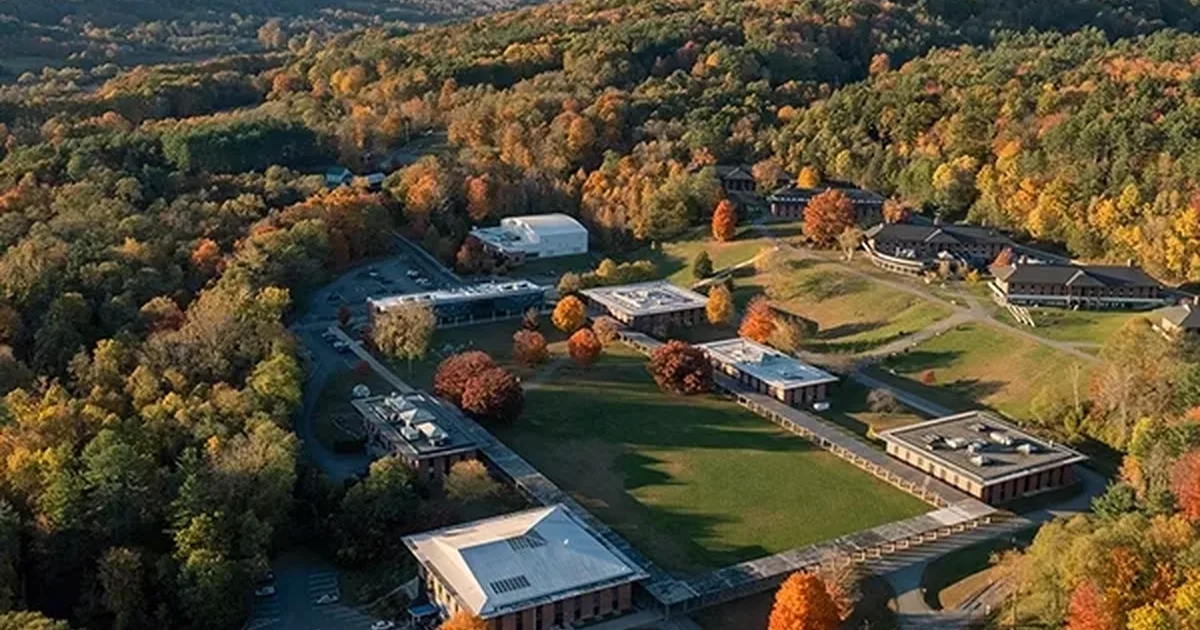
Location: Putney, Vermont
Number of Undergraduate Students: 500
Acceptance Rate: 86%
What’s unique about Landmark College is that it isn’t simply a college that offers support for neurodivergent students or students with learning disabilities. The entire institution is dedicated to students like these, so there are no special accommodations – everyone receives individualized support for all areas of study.
Not only does this mean there is a strong support system and small class sizes, but the majority of students there have ADHD or a different way of learning. This makes for exceptionally strong peer support. The campus itself is in a beautiful, quiet area and situated in a small town, though there still is access to the broader world not far from campus.
Beacon College
Location: Leesburg, Florida
Number of Undergraduate Students: 430
Acceptance Rate: 70%
Like Landmark College, Beacon College is an accredited institution solely dedicated to serving students with ADHD or learning disabilities. The average class size is only 14 students, and you know that you are getting a supportive environment and a faculty that knows how to help you learn. Professional skills are incorporated into the curriculum to help prepare students for the workplace. Beacon is one of the best places for neurodivergent students to learn how to succeed.
Lynn University
Location: Boca Raton, Florida
Number of Undergraduate Students: 2,400
Acceptance Rate: 79%
Lynn University offers the Institute for Achievement and Learning (IAL), where students have the opportunity to work with academic coaches on executive functioning and learning skills. Students in the program have personalized tutoring and coaching, and some classes are even taught by accredited IAL fellows who can help students who learn differently in their classes.
There is group tutoring, 1-on-1 tutoring, and tutoring specifically designed to help you with your reading, writing, and communication skills. Lynn’s accessibility team wants to help you make the most out of your college experience.
The financial picture: what ADHD support programs actually cost
This is the section most guides on this topic leave out entirely — and it matters significantly when making your college decision.
Basic disability accommodations (extra exam time, quiet testing rooms, note-taking assistance) are provided at no additional cost under the Americans with Disabilities Act. You document your diagnosis, register with the disability services office, and the accommodations are yours as a matter of legal right.
But the comprehensive, structured programs that make schools like the University of Arizona, University of Denver, and Curry College stand out — the weekly specialist meetings, the academic coaching, the dedicated ADHD-focused staff — are a different category. Many of these are fee-based programs offered above and beyond the standard ADA baseline.
Understanding what you're actually paying for is essential before making your decision.
What comprehensive ADHD support programs cost
Program fees vary significantly and change annually. The figures below are based on published 2024–25 information — verify directly with each school before applying.
How to get financial help for disability-related costs
FAFSA and disability: Having ADHD does not affect your FAFSA eligibility or your Student Aid Index calculation. Disability status is not reported on the FAFSA and has no impact on your need-based aid package. You should file the FAFSA regardless of your disability status.
Vocational Rehabilitation: If your ADHD significantly affects your ability to work, your state's Vocational Rehabilitation (VR) agency may cover education costs — including tuition, fees, and in some cases the cost of specialized support programs. VR is chronically underused by college-bound ADHD students. Contact your state's VR office before enrolling, not after, as wait lists exist and the application process takes time. Find your state's VR agency at careeronestop.org. And if you're an ADHD student looking at going back to school, fear not. Even if you didn't know about VR services on your first go-around, you can take advantage of them as part of a career change.
Supplemental Security Income (SSI): Students with ADHD who receive SSI may be able to use those funds toward education-related costs. SSI rules for students are complex — if you currently receive SSI, contact the Social Security Administration or a benefits counselor before making enrollment decisions, as enrollment can affect your benefit amount.
Workplace accommodations funding: Some employers provide education assistance specifically for employees with disabilities. If you or a parent work for a large employer, check their HR benefits documentation for disability-specific educational support.
Scholarships for students with ADHD
Private scholarships exist specifically for students with ADHD and other learning differences, and it's easier than you might think to win them. These are separate from institutional aid and can be combined with your FAFSA-based package. Verify current amounts and deadlines at each program's website before applying.
How to disclose ADHD in college applications and aid forms
On the FAFSA: ADHD is not reported on the FAFSA. There is no question about disability status. Filing is identical whether you have ADHD or not.
On college applications: Disclosure of ADHD in the application — typically in the additional information section or a disability accommodation question — is voluntary. It cannot legally be used as a negative factor in admissions. Students who disclose typically do so to explain context: a grade that suffered during a particularly difficult period, late diagnosis, or a gap in academic record. Whether to disclose is a personal decision; consult your school counselor about what makes sense for your specific application.
With the disability services office: After admission, you will need to formally document your ADHD with each school's disability services office to receive accommodations. This typically requires a psychological evaluation report, IEP, or 504 plan from a licensed psychologist or physician. Some schools accept recent documentation (within 3–5 years); others require documentation less than 3 years old. Contact each school's disability services office directly to understand their specific requirements.
You’re Not Alone!
Taking the leap to go to college certainly isn’t easy, especially when you have something like ADHD, but there are other people out there in the same boat who can support you. And as you’ve seen, there are lots of colleges that make it their mission to help you succeed!
We hope this article helped you find the colleges that can provide ADHD students with the support system they need to thrive in college.