If you’ve ever done any written work, then you surely remember that feeling once it’s finally finished. You’re sitting there, staring at the screen, you’re both proud and relieved, you take that one deep breath, you sigh, and you’re just… Done.
And while this is true when you’re actually done, the situation is quite different when you finish your first draft. The basic structure might be there, true. You might even have some nice sentences, which is even better. But your real voice, the part that makes what you write sound like you, is probably still hiding. This is totally fine, it’s what first drafts are for.
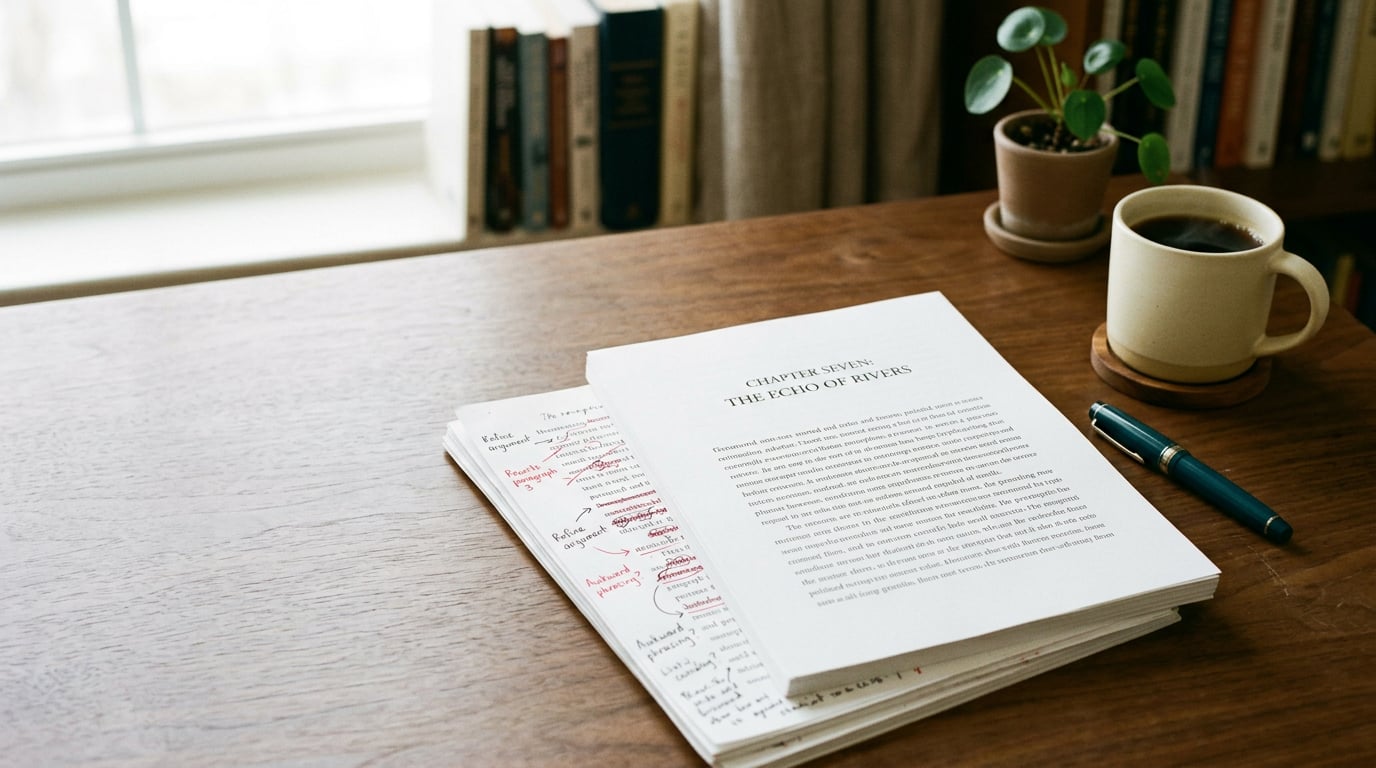
The real magic happens once you start refining that initial draft. All the rewriting and tinkering will bring clarity to your thoughts, and all your ideas will start to come together. They begin making sense. It’s only at your second, third, or even fifth draft that your voice starts to appear.
In this article, we’ll cover why first drafts (usually) fail to deliver and ultimately fall short, as well as what you can do to make your writing sound like you!
Why You Can’t Stop at First Draft
If you’ve spent hours working on your first draft, it’s easy to think it might not be a draft at all. It might be the final product, right? But that’s usually not the case. When you’re writing for the first time, your brain is juggling a lot – plot, grammar, structure, emotions, you’re probably even doubting yourself a bit. This kind of multitasking makes it really hard to sound clear and natural. And don’t forget that most first drafts are written in a rush. Even if you’re not close to your deadline, there’s a lot of excitement and pressure to deal with, which means it’s hard to step back and hear how your words actually sound.
On top of all this, structure is usually all over the place in early drafts. The intro is too long, the middle has no focus, the tone jumps around, etc. And we’re being totally honest, first drafts are mostly just idea dumps. That doesn’t have to be a bad thing, but it means that the real shaping, organizing, and polishing still need to happen.
Keep in mind that if you recognize these issues, you haven’t failed. Quite the contrary – you’re on the right track. Great writing is always messy at first.
Finding Your Voice in Revisions
Writing in a way that feels strong and honest takes work, and that work happens in revisions.
Here are some steps to take to ensure your voice comes out during editing. If you’ve ever wondered how to edit a book, an application, or even a personal statement, these will ring a bell.
- Step Away
Once the first draft is done, hit ‘save’ and walk away from it. Not forever, just for a while. When you take a break, your brain has a chance to reset and you can come back with fresh eyes. Being too close to the writing makes it hard to see what’s off. You’ll probably miss the parts that are confusing, awkward, or just don’t sound like you. Give yourself some space and you’ll have an easier time finding weak spots in structure and tone.
- Read It Out Loud
This could feel weird at first, but reading what you wrote out loud is one of the quickest ways to notice what’s off. When you hear your own words, you can catch clunky phrasing, dialogue that feels unnatural, and spots where your voice disappears. What looks okay on a screen might sound strange when spoken.
Also, if you find yourself having a hard time reading the words, that’s a good sign your reader might struggle, too.
- Remove the Noise
Your voice is often hiding behind words you don’t really need. These would be your fillers, clichés, and language that’s too formal. All of this can make your writing feel heavy and generic. This problem occurs most in academic or application writing, where you can easily slip into an overly professional tone that doesn’t sound like you at all.
Try to trim out anything that feels forced and focus on saying things in a simple, direct way. Ironically, the more you let go of the fluff, the more it sounds like you.
- What Are You Really Trying to Say?
Every draft is a chance to get closer to your point. Each time you revise, ask yourself what your main message is. What do you want the reader to understand, feel, or remember? Once that’s clear, you can organize your writing better and choose the right tone. This question will also help you stay on topic and not go off on tangents.
Conclusion
Rarely does someone write a masterpiece on their first try – so don’t rely on that. Go with the basics; the next time you think your initial draft might be amazing and it requires no revisions, take a step back and a deep breath.
Your first draft is (likely) a rough sketch. And that’s normal, it’s supposed to be all over the place. But this is also where all the good stuff happens.
So, embrace the chaos and refine your soon-to-be masterpiece bit by bit until it shines.