.jpg)
Chemical engineering consistently produces the highest starting salaries of any engineering discipline — median starting salary of $75,000–$85,000, with petroleum and process engineers at major chemical and energy companies earning $95,000–$120,000+ within five years of graduation. It also has some of the most substantial co-op programs in engineering, with Dow, BASF, ExxonMobil, and pharmaceutical companies offering $25,000–$40,000 per co-op rotation.
The financial case for chemical engineering is strong. From local programs to the best engineering schools in the country, there are ample opportunities for federal and institution-level scholarships and grants to bring the price tag within reach. The question is which program gives you the best combination of education quality and access to the employer networks that drive those outcomes.
Funding a Chemical Engineering Degree
Industry Co-op Programs
Chemical engineering co-ops are the most financially significant funding source for most undergraduates. Major employers include:
- Dow Chemical/DowDuPont: $28,000–$38,000 per rotation, strong co-op pipeline at Michigan, Illinois, and Ohio State
- BASF: $25,000–$35,000 per rotation, particularly strong from UT Austin and Texas A&M
- ExxonMobil: $30,000–$40,000 per rotation, strong from MIT, Caltech, and UT Austin
- Procter & Gamble: $25,000–$35,000 per rotation, strong from Ohio State and Michigan
- Pfizer/Merck/AstraZeneca: $25,000–$35,000 per rotation, particularly strong from Drexel and Northeastern for pharmaceutical engineering
Three to four co-op rotations over five years can generate $75,000–$160,000 in total earnings — often more than the tuition cost of an in-state program.
SMART Scholarship
Chemical engineering and materials science are explicitly eligible SMART disciplines. DoD chemical engineering research spans energetic materials, protective equipment, and chemical threat detection. Apply at smartscholarship.org.
AIChE Scholarships
The American Institute of Chemical Engineers Foundation administers multiple scholarship programs:
- Donald F. and Mildred Topp Othmer Scholarship Awards: $1,000 awards for AIChE student chapter members
- John J. McKetta Undergraduate Scholarship: $5,000 for undergraduate AIChE members
- Minority Affairs Scholarships: Multiple programs for underrepresented students in chemical engineering
See aiche.org/community/awards/scholarships for current programs.
NSF GRFP
Chemical engineering is a core NSF GRFP discipline — particularly for materials science, polymer chemistry, and process engineering applications. Apply at nsfgrfp.org. Deadline: late October.
DOE Office of Science Graduate Student Research (SCGSR)
The Department of Energy SCGSR program funds chemical engineering graduate students to conduct research at DOE national laboratories — $3,000/month stipend supplement plus travel. Particularly relevant for students in energy, materials, and process engineering research. See science.osti.gov/wdts/scgsr.
Best Colleges for Chemical Engineering
Massachusetts Institute of Technology (Cambridge, MA)
Ranked #1 nationally for chemical engineering
MIT's Department of Chemical Engineering is consistently ranked #1 nationally. Research programs span energy conversion, biological engineering, and nanotechnology — areas with strong NSF GRFP and DOE fellowship potential. MIT chemical engineers have some of the highest starting salaries of any engineering graduates.
MIT is need-blind and meets 100% of demonstrated need with no loans for families earning under $90,000. The high sticker price is often substantially offset by institutional aid — MIT's average financial aid package for students with demonstrated need is approximately $58,000/year.
Financial snapshot: Need-blind; no loans under $90K. Strong co-op relationships with ExxonMobil, Dow, and pharmaceutical companies.
California Institute of Technology (Pasadena, CA)
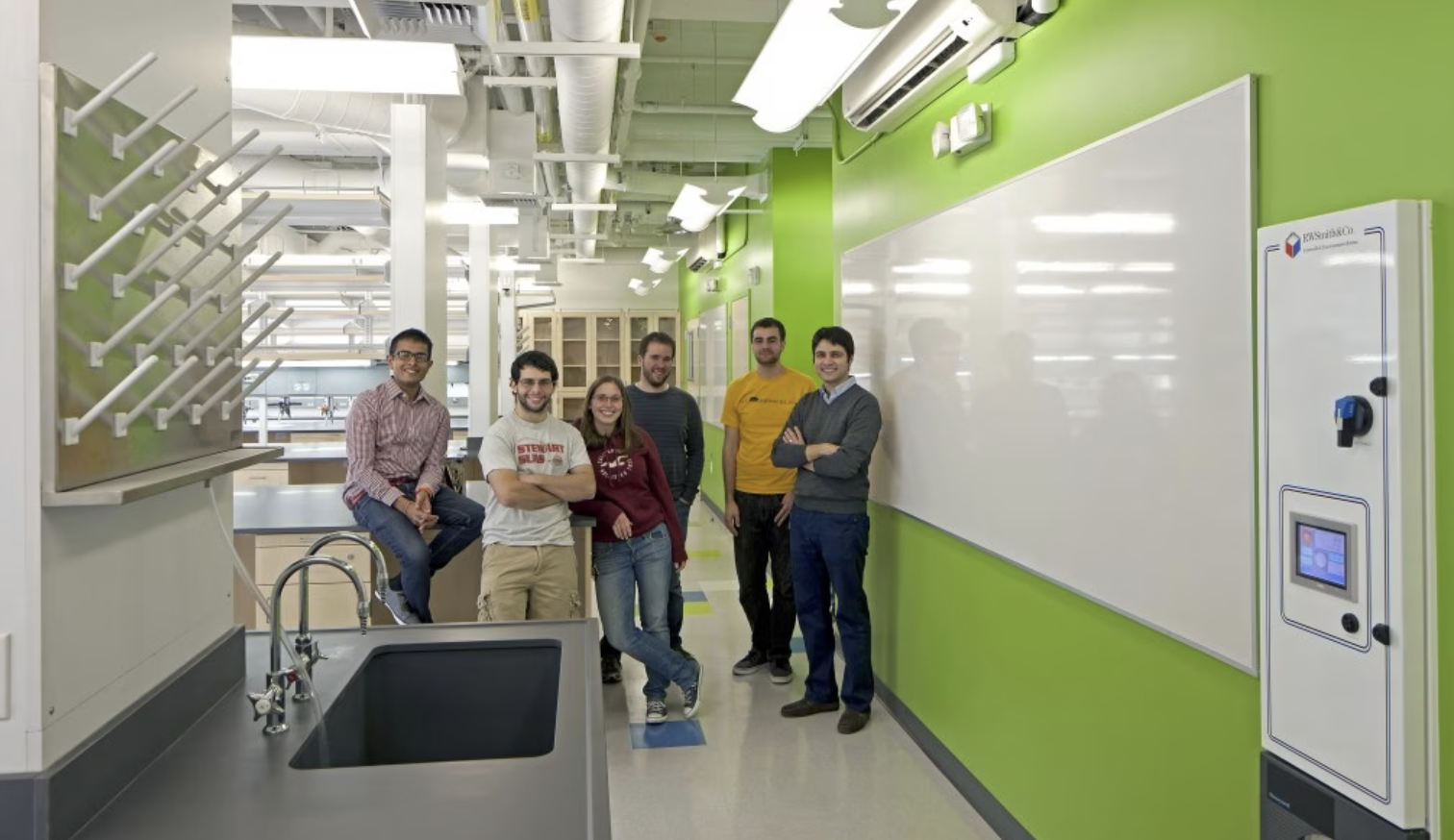
Ranked #2 nationally for chemical engineering
Caltech's chemical engineering program is among the most rigorous in the world, with particular strength in catalysis, reaction engineering, and materials science. Caltech's proximity to JPL and its DOE laboratory relationships create strong research funding pathways.
Caltech is need-blind and meets 100% of demonstrated need. Its small size means virtually every undergraduate who wants research experience can get it.
Financial snapshot: Need-blind; 100% need met. Strong DOE SCGSR and NSF GRFP placement.
University of Minnesota (Minneapolis, MN)
Ranked #3 nationally for chemical engineering (graduate)
Minnesota's chemical engineering program is particularly strong in polymer science, biomaterials, and energy systems — three of the highest-growth areas in the field. The program has strong industry relationships with 3M, which is headquartered in Minneapolis and runs one of the strongest chemical engineering co-op and internship programs in the country.
Minnesota in-state tuition is approximately $15,000/year. The 3M relationship creates co-op access that rivals larger programs.
Financial snapshot: In-state tuition for MN residents. 3M co-op pipeline: $28,000–$35,000/rotation.
University of Texas at Austin (Austin, TX)
Best for petroleum and energy chemical engineering
UT Austin's McKetta Department of Chemical Engineering isn't just one of the best engineering schools in Texas -- consistently ranked top 5 nationally and has particularly strong programs in petroleum engineering, energy systems, and process design. The Texas energy industry creates exceptional co-op density — ExxonMobil, Shell, Chevron, BASF, and dozens of energy companies recruit heavily from UT Austin.
Texas residents benefit from in-state tuition and the TEXAS Grant. The co-op and internship pipeline from UT Austin into the energy industry is among the deepest in chemical engineering.
Financial snapshot: In-state tuition + TEXAS Grant for TX residents. Energy industry co-op earnings: $30,000–$40,000/rotation.
University of Delaware (Newark, DE)
Delaware's chemical engineering department is one of the oldest and most respected in the country — it helped establish chemical engineering as an academic discipline. The program is particularly strong in polymer science, catalysis, and pharmaceutical engineering.
Delaware's location in the mid-Atlantic chemical corridor — near DuPont (a Delaware institution), AstraZeneca, and multiple pharmaceutical manufacturers — creates dense co-op access. In-state tuition is approximately $15,000/year.
Financial snapshot: In-state tuition for DE residents. Strong pharmaceutical industry co-op pipeline.
Georgia Institute of Technology (Atlanta, GA)
Best value chemical engineering program
Georgia Tech's chemical engineering program combines top-10 rankings with Georgia in-state tuition (~$12,000/year for Georgia residents). Strong research programs in electrochemical energy storage and biomedical applications of chemical engineering.
Financial snapshot: ~$12,000/year in-state for GA residents. Best cost-to-ranking ratio in chemical engineering.