.jpg)
Engineering is one of the most financially rewarding degrees you can earn — and one of the most expensive to complete without a plan. The schools ranked #1 by US News charge $55,000–$60,000 per year. But engineering students have access to federal scholarship programs that can cover that cost entirely, plus a living stipend — programs most applicants have never heard of.
This guide covers the federal scholarship programs available specifically to engineering students, which schools are best positioned to access them, and which programs within each school lead each engineering discipline. Each school listed here is identified by its strongest engineering sub-discipline — so you can use this as a starting point and follow the links to the dedicated discipline guides for more detail.
Federal Funding Programs Every Engineering Student Should Know
NSF SMART Scholarship: The Most Valuable Scholarship in Engineering
The Department of Defense Science, Mathematics, and Research for Transformation (SMART) Scholarship is the engineering equivalent of the CyberCorps program, which supports cybersecurity students. It covers full tuition, pays an annual stipend of $25,000–$38,000 depending on degree level, and provides a summer internship at a DoD facility before graduation.
The service commitment: For every year of scholarship support, you work one year in a DoD civilian position after graduation. A two-year master's scholarship requires two years of DoD employment. Positions span all branches and agencies: Army Research Lab, Naval Research Laboratory, Air Force Research Laboratory, DARPA, and dozens more.
Who qualifies: US citizens enrolled or accepted in a STEM degree program at an accredited US institution. Undergraduate, master's, and doctoral students all qualify. Applications are open year-round with rolling review.
The math: A two-year master's program at $35,000/year tuition plus $37,000/year stipend = approximately $144,000 in combined tuition and living support over two years.
Apply at smartscholarship.org.
NSF Graduate Research Fellowship Program (GRFP)
The NSF Graduate Research Fellowship provides $37,000 per year in stipend plus $16,000 per year in cost-of-education allowance for three years of graduate study. No service commitment required.
The GRFP is highly competitive — approximately 2,000 awards per year across all STEM fields — but engineering students at strong research programs have a genuine path to the award. Schools with strong NSF GRFP track records include MIT, Stanford, Caltech, Berkeley, and Carnegie Mellon.
Apply at nsfgrfp.org.
Deadline: late October annually.
Co-op Programs: (Financially) Valuable Experience
Engineering co-op programs — alternating semesters of coursework and full-time paid work at engineering employers — are a significant and underutilized source of funding. Drexel, Northeastern, Georgia Tech, Purdue, and several other universities have structured co-op programs where students earn $20,000–$40,000+ per semester working at companies like Boeing, Lockheed Martin, GE, and NASA.
A student who completes three or four co-op rotations over five years can earn $80,000–$150,000 in total compensation — significantly reducing or eliminating loan dependence regardless of which scholarship they receive.
The financial planning case: Co-op adds one year to most programs (5 years vs. 4) but the income earned often exceeds what would have been borrowed. For students who don't qualify for SMART or NSF GRFP, co-op is the most reliable financial strategy.
Top Schools for Engineering (By Discipline)
Each school below is identified by the engineering discipline where it's nationally strongest. Each discipline links to a dedicated guide covering that field in depth.
MIT (Cambridge, MA)
Best for: Electrical engineering, computer engineering, aerospace engineering
MIT's School of Engineering ranks #1 nationally and has produced more engineering Nobel laureates and MacArthur Fellows than any other institution. About 45% of MIT graduate students are enrolled in engineering. The school has 20+ research centers spanning cancer research, ocean engineering, and robotics.
MIT is need-blind for all domestic students and meets 100% of demonstrated need with no loans for families under $90,000 — making it genuinely accessible for high-need students despite its $59,000 sticker price. MIT students also have among the highest NSF GRFP award rates of any institution.
SMART Scholarship positioning: Strong. MIT graduates entering DoD civilian research are competitive for placement at DARPA, Lincoln Laboratory (MIT-affiliated), and Naval Research Laboratory.
Stanford University (Stanford, CA)
Best for: Computer engineering, mechanical engineering, electrical engineering
Stanford's School of Engineering has created technologies that reshaped information technology, communications, healthcare, and business. The school's proximity to Silicon Valley gives engineering students unparalleled access to internships, research partnerships, and entrepreneurship opportunities — and some of the highest starting salaries of any engineering program.
Stanford is need-blind for domestic undergraduates and meets 100% of demonstrated need. The average financial aid package for undergraduates is approximately $70,000 per year for families earning under $150,000.
Note: Stanford is not an Ivy League school — it's a private research university, but independent of the eight Ivy League institutions.
SMART Scholarship positioning: Strong. Stanford has extensive DoD research relationships through DARPA and SRC programs.
Georgia Institute of Technology (Atlanta, GA)
Best for: Aerospace engineering, industrial engineering, mechanical engineering
Georgia Tech is the strongest combination of engineering program quality and value of any school on this list. Its in-state tuition of approximately $12,000/year makes it dramatically more accessible than private alternatives — and its engineering programs compete directly with MIT and Stanford in several disciplines.
Georgia Tech's co-op program is one of the largest and most established in the country, with 400+ employer partners including Boeing, NASA, Lockheed Martin, and Delta. Students who complete the co-op track earn an average of $23,000 per co-op rotation.
SMART Scholarship positioning: Excellent. Georgia Tech has one of the highest rates of SMART Scholarship awards of any institution, driven by its strong DoD research relationships and aerospace program.
Purdue University (West Lafayette, IN)
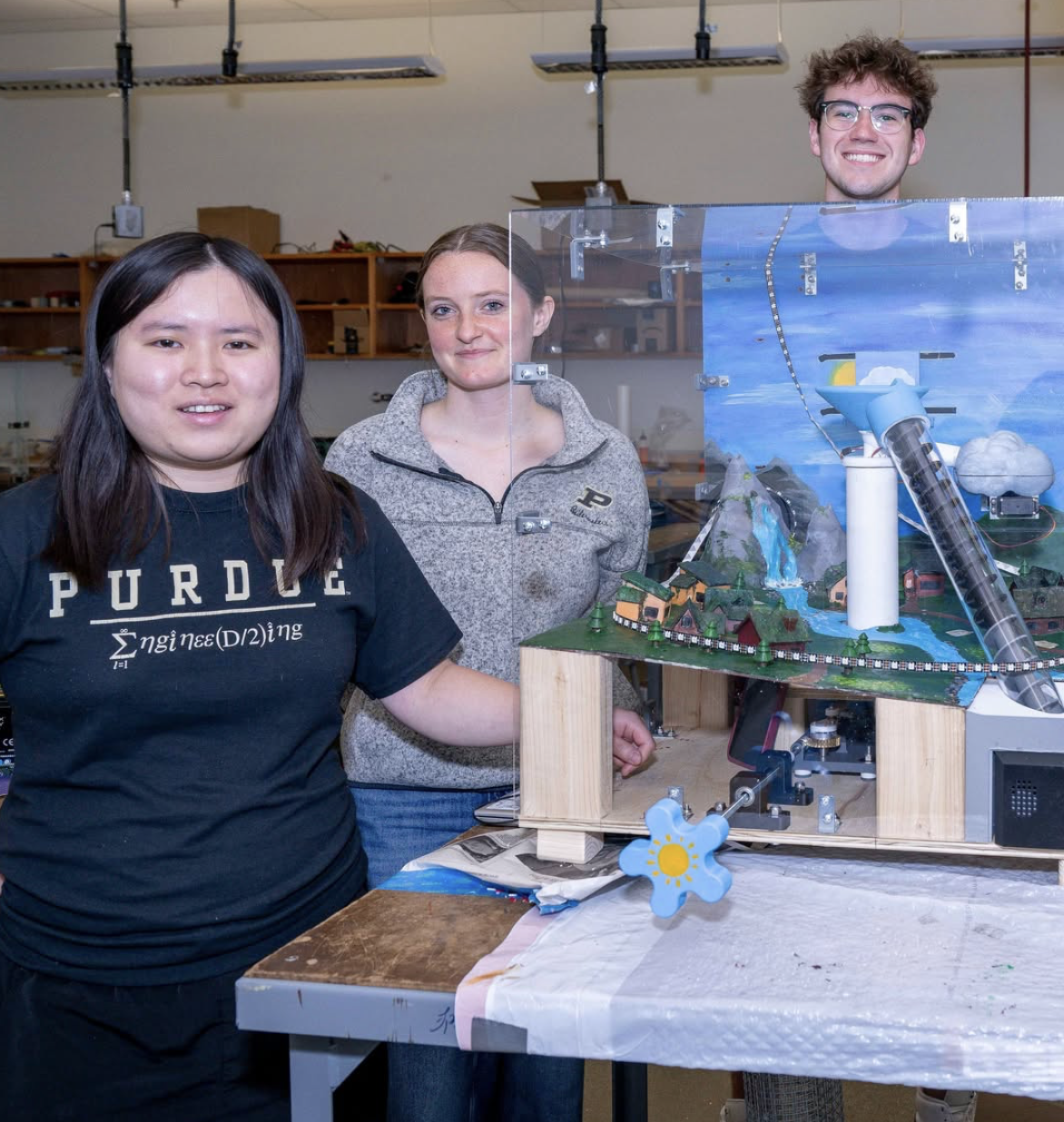
Best for: Aerospace engineering, mechanical engineering, nuclear engineering
Purdue has produced more astronauts than any other university — Neil Armstrong and Gus Grissom are among its alumni. Its aerospace engineering program consistently ranks among the top three nationally. The mechanical engineering and nuclear engineering programs are equally strong.
Indiana residents benefit from Purdue's strong in-state tuition structure. Purdue also participates in SMART Scholarship at both undergraduate and graduate levels — one of few schools offering SMART at the undergraduate tier.
SMART Scholarship positioning: Excellent. Purdue's aerospace and nuclear programs produce the exact profiles DoD civilian research agencies prioritize.
University of Michigan (Ann Arbor, MI)
Best for: Mechanical engineering, biomedical engineering, civil engineering
Michigan's College of Engineering is one of the largest and most comprehensive in the country, with strong programs across virtually every discipline. Its mechanical engineering program is particularly strong, as is biomedical engineering through its alliance with Michigan Medicine.
Michigan residents benefit from the Go Blue Guarantee — free tuition for families earning under $65,000 — and the university meets 100% of demonstrated financial need. Michigan's research expenditures in engineering exceed $500M annually, creating strong pathways to NSF GRFP and SMART awards.
SMART Scholarship positioning: Strong. Michigan has extensive relationships with Army and Navy research labs.
Carnegie Mellon University (Pittsburgh, PA)
Best for: Computer engineering, electrical engineering, robotics
CMU's College of Engineering is the birthplace of modern computer science and robotics. Its computer engineering and electrical engineering programs are among the strongest in the world, and CMU has more computing patents than any other university. The Robotics Institute at CMU is the largest robotics research center in the world.
CMU offers significant need-based aid — average grant for freshmen is approximately $42,000 — and has strong NSF GRFP placement rates for computing and robotics engineering fields.
SMART Scholarship positioning: Strong. CMU's relationship with DoD AI and cybersecurity research programs creates natural SMART pathways.
California Institute of Technology (Pasadena, CA)
Best for: Aerospace engineering, chemical engineering, mechanical engineering
Caltech is the highest research output per faculty member of any university in the world. Its aerospace program is ranked #2 nationally, its chemical engineering program is ranked #2 nationally, and its civil engineering program is ranked #12. The school manages NASA's Jet Propulsion Laboratory — meaning Caltech engineering students have direct pathways to NASA research.
Caltech is need-blind for domestic students and meets 100% of demonstrated need. Its small size (approximately 950 undergraduates) means exceptionally close faculty relationships.
SMART Scholarship positioning: Excellent for aerospace and defense research pathways through JPL.
University of California, Berkeley (Berkeley, CA)
Best for: Civil engineering, mechanical engineering, nuclear engineering, electrical engineering
UC Berkeley's College of Engineering has over 40 research centers and produces more engineering PhDs than any other public university. For California residents, in-state tuition plus Blue and Gold Opportunity Plan coverage makes Berkeley one of the strongest value propositions in engineering — top-5 program quality at public university cost.
Berkeley's PREP and T-PREP programs specifically support low-income and first-generation engineering students with retention resources and faculty mentorship. California residents should note that Cal Grants stack with institutional aid.
SMART Scholarship positioning: Strong, particularly for nuclear engineering through Berkeley's nuclear research programs.
University of Illinois Urbana-Champaign (Champaign, IL)
Best for: Electrical engineering, computer engineering, civil engineering
Illinois is one of the strongest public engineering programs in the country, particularly in electrical and computer engineering — its ECE department is consistently ranked top 5 nationally. Illinois Grainger Engineering is also strong in civil and structural engineering.
Illinois in-state tuition is approximately $15,000/year. The university has strong employer co-op and internship networks with major tech and engineering companies — Caterpillar, Motorola, and Abbott are among hundreds of Illinois engineering employers.
SMART Scholarship positioning: Good. Illinois has strong DoD research relationships through its research park.
Texas A&M University (College Station, TX)
Best for: Petroleum engineering, aerospace engineering, civil engineering
Texas A&M's engineering program is the largest in the country by enrollment. But it isn't just one of the best engineering schools in Texas -- its petroleum engineering program is consistently ranked #1 nationally. The aerospace engineering program is among the top 10. Texas residents benefit from in-state tuition and the TEXAS Grant program.
Texas A&M's Engineering Experiment Station is one of the largest engineering research organizations in the US and creates strong SMART and DoD research pathways.
SMART Scholarship positioning: Strong, particularly for petroleum, aerospace, and civil engineering disciplines with DoD relevance.
Explore Engineering Schools By Sub-Discipline
Each engineering discipline has its own funding landscape, employer co-op networks, and program selection criteria. The guides below cover each in depth:
- Aerospace engineering → best colleges for aerospace engineering — NASA, DARPA, Air Force Research Lab pathways
- Mechanical engineering → best colleges for mechanical engineering — co-op programs, automotive and defense employer networks
- Electrical engineering → best colleges for electrical engineering — semiconductor industry pathways, IEEE scholarships
- Nuclear engineering → best colleges for nuclear engineering — NRC scholarships, DOE fellowships
- Biomedical engineering → best colleges for biomedical engineering — NIH funding, medical device industry pathways
- Civil engineering → best colleges for civil engineering — infrastructure careers, ASCE scholarships
- Chemical engineering → best colleges for chemical engineering — pharmaceutical and energy industry co-ops
- Software engineering → best colleges for software engineering — tech industry recruiting, CyberCorps overlap