Mechanical engineering is the broadest engineering discipline — it's the foundation that touches aerospace, automotive, biomedical, energy, robotics, and manufacturing. That breadth is both its appeal and its challenge: the degree is demanding regardless of which school you attend, and the financial aid and co-op landscape varies significantly between programs.
The schools on this list were selected for program quality, SMART Scholarship access, industry co-op relationships, and cost — the factors that determine both educational and financial outcomes.
Funding a Mechanical Engineering Degree
ASME Scholarships
The American Society of Mechanical Engineers Foundation runs more than 20 scholarship programs for undergraduate and graduate mechanical engineering students. Awards range from $1,000 to $22,500. Most require ASME student membership — approximately $30/year for students.
Notable programs include:
- Berna Lou Cartwright Scholarship: $5,000 for undergraduate ME students
- Sylvia W. Farny Scholarship: $5,000 for undergraduate ME students
- Allen J. Baldwin Scholarship: $5,000
- Rice-Cullimore Scholarship: $5,000 for graduate students
See asme.org/about-asme/scholarships-fellowships for the full list and current deadlines. These are among the most underused scholarships in engineering because most ME students aren't ASME members.
SMART Scholarship
Mechanical engineering is a core SMART Scholarship discipline — DoD mechanical engineering research spans propulsion, materials, thermal systems, robotics, and weapons systems. Full tuition plus $25,000–$38,000/year stipend. Strong SMART placement from Georgia Tech, Michigan, Purdue, and MIT.
Apply at smartscholarship.org.
NSF Graduate Research Fellowship
The NSF GRFP covers mechanical engineering broadly at the graduate level. $37,000/year stipend plus $16,000/year cost-of-education for three years. No service requirement. Apply at nsfgrfp.org. Deadline: late October.
DOE SCGSR
Mechanical engineering students working in energy systems, heat transfer, materials, or fluid dynamics research qualify for DOE SCGSR lab placement — $3,000/month supplement at national laboratories. See science.osti.gov/wdts/scgsr.
Industry co-ops
Mechanical engineering has the deepest co-op pipeline of any engineering discipline by employer count:
- Automotive: GM, Ford, Stellantis — $22,000–$32,000/rotation. Strongest from Michigan, Purdue, and Kettering
- Aerospace: Boeing, Lockheed Martin, Northrop — $23,000–$34,000/rotation. Strongest from Georgia Tech, MIT, Purdue
- Energy: GE, Siemens, ExxonMobil — $24,000–$35,000/rotation. Strongest from Georgia Tech, Texas A&M, MIT
- Defense/robotics: Raytheon, General Dynamics, DARPA — $24,000–$33,000/rotation
Three co-op rotations across these employers generates $65,000–$100,000+ in undergraduate earnings. See our co-op vs internship guide for how co-op earnings factor into your school decision.
Best Schools for Mechanical Engineering
Massachusetts Institute of Technology (Cambridge, MA)
Ranked #1 nationally for mechanical engineering
MIT's Department of Mechanical Engineering is the top-ranked ME program in the world. Undergraduate options include a standard BSME and a joint Bachelor of Science in Mechanical and Ocean Engineering — one of few programs combining traditional ME with marine and offshore systems. The 48-unit elective structure gives students unusual flexibility to combine ME with coursework in energy, robotics, biomedical engineering, or ocean systems.
MIT's co-op and internship relationships span every major ME employer sector — energy, aerospace, defense, and robotics. SMART Scholarship placement from MIT runs through the Lincoln Laboratory and DARPA research pipelines.
Financial snapshot: Need-blind; no loans for families under $90K. Strong SMART and NSF GRFP placement.
California Institute of Technology (Pasadena, CA)
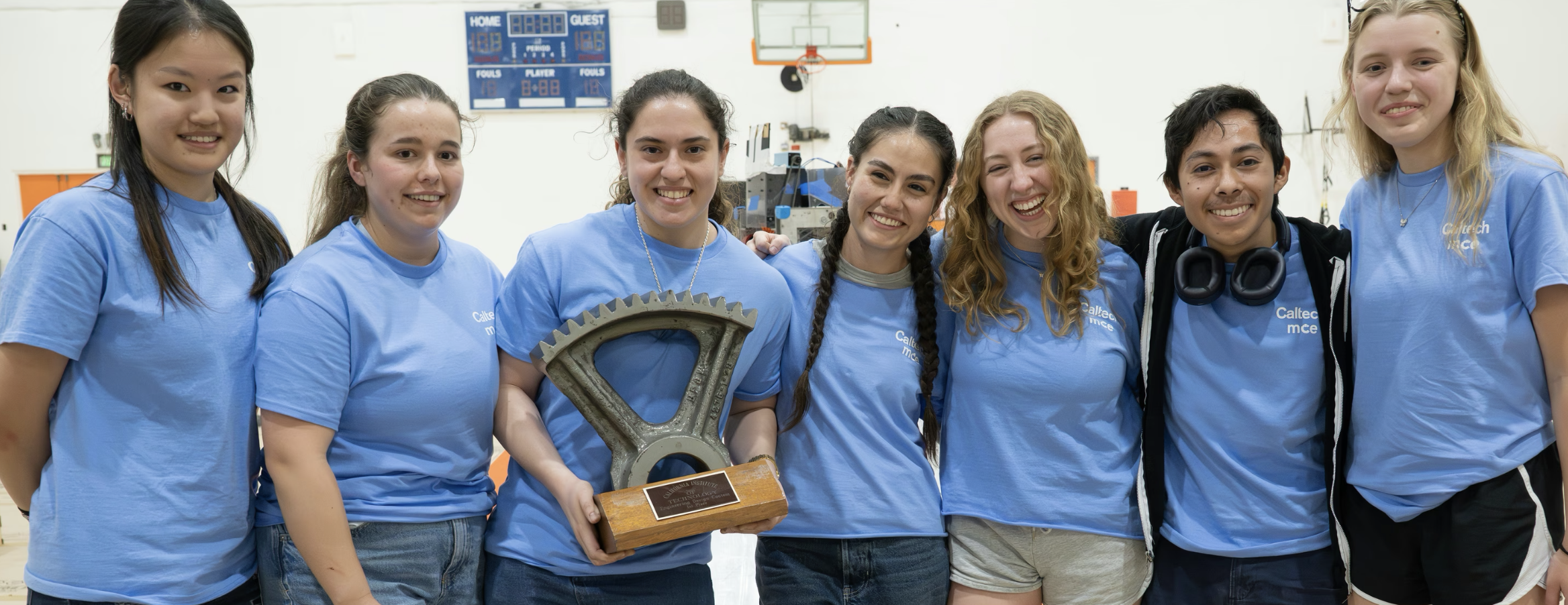
Ranked #2 nationally; strongest research per faculty ratio
Caltech's ME program is rigorous, small, and research-intensive. Specialized tracks in Design, Systems, and Mechatronics; Fluids and Transport; and Thermodynamics and Energy give undergraduates genuine depth in focused areas. Faculty research output per capita is the highest of any university in the world — and undergraduate students participate directly.
Caltech is need-blind and meets 100% of demonstrated need. For students with high financial need, Caltech often costs less than large public universities after institutional aid.
Financial snapshot: Need-blind; 100% need met. Strong NSF GRFP and DOE research placement.
Georgia Institute of Technology (Atlanta, GA)
Best value; strongest co-op program; top 3 nationally
Georgia Tech's Woodruff School of Mechanical Engineering is consistently ranked top 3 nationally. Despite this, "may not be as well known as some of its counterparts" is simply incorrect — Georgia Tech is one of the most employer-recognized engineering programs in the country. Its co-op program generates an average of $23,000 per rotation across 400+ employer partners including Boeing, Lockheed Martin, Siemens, and GE.
Concentrations include Nuclear and Radiological Engineering, Micro- and Nano-Engineering, Mechanics of Materials, Robotics, and Thermal and Fluid Systems. Georgia Tech in-state tuition (~$12,000/year) combined with SMART Scholarship access makes it the best financial value in top-ranked ME.
SMART positioning: Excellent — Georgia Tech's DoD research relationships span defense, aerospace, and energy systems.
Financial snapshot: ~$12,000/year in-state for GA residents. Best cost-to-ranking ratio. Co-op: $23,000 avg/rotation.
University of Illinois Urbana-Champaign (Champaign, IL)
Top 5 nationally; strongest manufacturing and industrial crossover
Illinois's Grainger College of Engineering ME program is consistently top 5 nationally. The department's 65+ full-time faculty produce research output that receives national recognition — and that research depth translates into strong NSF GRFP and DOE SCGSR placement for graduate students. Strong programs in thermal systems, fluid mechanics, and solid mechanics.
Illinois's Research Park — on-campus tech company offices — creates unusually direct co-op access for students who want to stay in Champaign-Urbana rather than relocate. Caterpillar, Deere & Company, and Abbott are among the employers with Illinois co-op relationships.
Financial snapshot: In-state tuition ~$15,000/year for IL residents. Strong state grant programs.
University of Michigan (Ann Arbor, MI)
Best for automotive co-ops; top 5 nationally
Michigan's Department of Mechanical Engineering is consistently ranked top 5 nationally with particular strength in automotive engineering, robotics, and manufacturing systems. The proximity to Detroit — and Michigan's dominant position in automotive industry recruiting — creates co-op access unavailable at any other program. GM, Ford, and Stellantis recruit heavily and specifically from Michigan ME.
Michigan residents benefit from Go Blue Guarantee (free tuition under $65K family income). The Michigan Space Grant Consortium provides ME students pursuing aerospace applications with additional fellowship access.
SMART positioning: Strong — Michigan's Air Force and Army research lab relationships create consistent SMART placement.
Financial snapshot: Go Blue Guarantee for MI residents under $65K. Best automotive co-op pipeline nationally.
Purdue University (West Lafayette, IN)
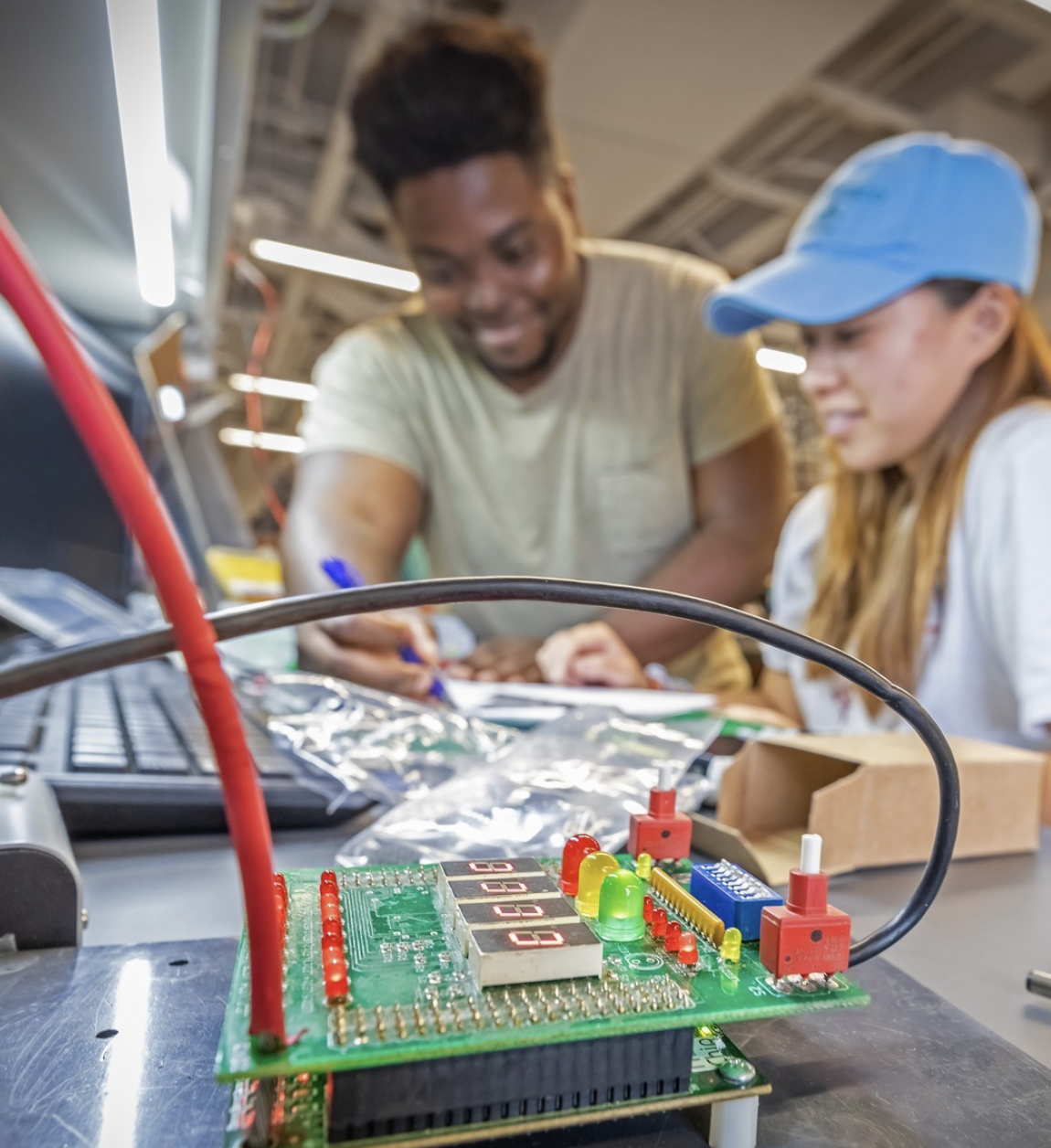
Most industry co-op breadth; top 10 nationally
Purdue's School of Mechanical Engineering is consistently ranked top 10 nationally with particular strength in aerospace/mechanical crossover, automotive systems, and manufacturing. Purdue participates in SMART Scholarship at both undergraduate and graduate levels — one of few ME programs offering SMART to undergraduates. The co-op program covers automotive (Ford, GM), aerospace (Boeing, Raytheon), and energy (GE, Duke Energy) employers simultaneously.
Indiana residents benefit from in-state tuition and Purdue's tuition freeze policy. Purdue's ME program is particularly strong for students who want automotive or defense industry placement combined with SMART Scholarship eligibility.
SMART positioning: Excellent — available at undergraduate level, strong aerospace-mechanical DoD connections.
Financial snapshot: In-state tuition for IN residents. Purdue Freeze. SMART at UG level.
Stanford University (Stanford, CA)
Best for robotics and energy ME; Silicon Valley access
Stanford's ME department is ranked top 5 nationally with particular depth in robotics, biomechanical engineering, and energy systems. The proximity to Silicon Valley means ME students at Stanford access tech industry co-ops and research internships — Apple, Tesla, and dozens of robotics and autonomous vehicle companies recruit from Stanford ME.
Stanford is need-blind for domestic undergraduates and meets 100% of demonstrated need. Average institutional aid package: approximately $70,000 for families with demonstrated need.
Financial snapshot: Need-blind; avg $70K aid package. Strong robotics and energy industry pipeline.
Kettering University (Flint, MI)
Best co-op model nationally; automotive engineering specialist
Kettering's entire academic model alternates work and school terms — students spend half their time in class and half in paid co-op positions from their first year. The automotive focus is unmatched: GM, Ford, Stellantis, BorgWarner, and dozens of automotive suppliers have deep Kettering relationships. Average co-op earnings: $22,000–$32,000 per rotation, with students completing multiple rotations before graduation.
For Michigan-area students targeting automotive careers, Kettering's co-op model can generate enough earnings to pay for the entire degree while graduating with 2+ years of professional experience.
Financial snapshot: Merit scholarships available. Co-op earnings average $22K–$32K/rotation. Best automotive industry co-op model.
Considering another angle? We've also covered other engineering disciplines + topics, like:
- Best colleges for engineering — national pillar, SMART Scholarship overview
- Best colleges for aerospace engineering — ME/aerospace crossover disciplines
- Best colleges for nuclear engineering — thermal hydraulics crossover
- Best engineering schools in Texas — Texas A&M ME program
- Co-op vs internship — how co-op earnings factor into school choice